Fire escape ladders can give you a second way out when smoke blocks the stairs. But the time to figure out whether a ladder fits your window is on a quiet afternoon, not when the smoke alarm goes off. Start with one question: If the usual way out from each bedroom is blocked, where does everyone go?
Why a second way out matters
Think about a bedroom upstairs with one door leading to the hall. If a fire starts near the bottom of the stairs, the front and back doors may both be out of reach. Two doors downstairs still leave you with one way down. Look for a second route that does not take you back through the same part of the house.
Smoke can make a familiar hallway hard to navigate, even before you see flames. It can also contain carbon monoxide and other toxic gases. Follow home fire escape planning advice from Ontario’s fire safety guide and agree on a second way out before you need it. Smoke can block a route in seconds, so there is no fixed amount of time to get out.
What to do if smoke blocks the stairs
Use a different exit if you can reach it safely. Alert anyone you can on your way out without delaying your escape. Leave your belongings, close doors behind you when you can do so safely, and go to your outdoor meeting place. Call 911 from outside. Tell firefighters if anyone may still be inside, and do not go back in.
If there is no safe way out, do not push through thick smoke or jump. If you can, move to a room away from the fire and smoke, close the door, and call 911 immediately. Give your address, floor, room or apartment number, and the number of people with you. Tell the emergency call handler if anyone needs help moving. If you can safely signal from a window, do so and follow the emergency call handler’s instructions.
If you live in an apartment, learn your building’s fire plan before you need it. Find the designated exit stairs and know where they lead. If you can evacuate safely, use the stairs, not the elevator, unless firefighters tell you otherwise. A portable window ladder is not a plan for climbing down from a high-rise. See local fire safety guidance.
How to choose fire escape ladders for a low-rise home
A portable ladder can make sense for a suitable upper-floor window when the usual way out is blocked and the window route is clear of fire and smoke. Fire escape ladders come in different lengths, so start by measuring from the intended attachment point to the ground. Then check the window opening, the mounting requirements, and the rated load for that exact model. Look down as well: a basement well, a fence, or another obstruction can make a proposed landing spot unsafe.
Compare the local fire escape ladders below by usable length and attachment type. Measure your own route first. A raised foundation, a sloping garden or a basement window well can make two homes with the same number of storeys need different equipment.
Follow the manufacturer’s instructions for storage, inspection, and deployment. Never improvise an anchor or substitute a sheet or household rope. A portable ladder does not replace required exits, working smoke alarms, or your building’s evacuation plan. If someone cannot climb a ladder safely, plan a different route or arrange appropriate assistance before an emergency.
Compare six ISOP fire escape ladders in Canada
Click a photo to see the model’s dimensions, attachment options, and instructions. Before choosing a wall-mounted model, have a qualified installer check the mounting location.
1. Fire Escape Ladder for Second Story Windows 13ft (4 m)

Check the opening and sill before choosing a window-hook model. Measure all the way down to a clear landing.
2. Fire Escape Ladder 2 Story 16 ft – Rope Ladder Fire Escape

This is a longer option where a shorter ladder cannot reach. Measure before ordering, even if the product is described by storey count.
3. Rescue Rope Ladder 2 Storey 16ft with Stand-Off Stabilizers

Stand-offs give your feet more room by keeping the rungs away from the wall. Check for obstacles below the window.
4. Emergency Rope Ladder 5m (16ft) | Hanging Fire Escape Ladder

Check the attachment method for this model and make sure it matches the escape point you have planned.
5. Fire Rescue Ladder 4 m (13ft) with Mounting Hardware
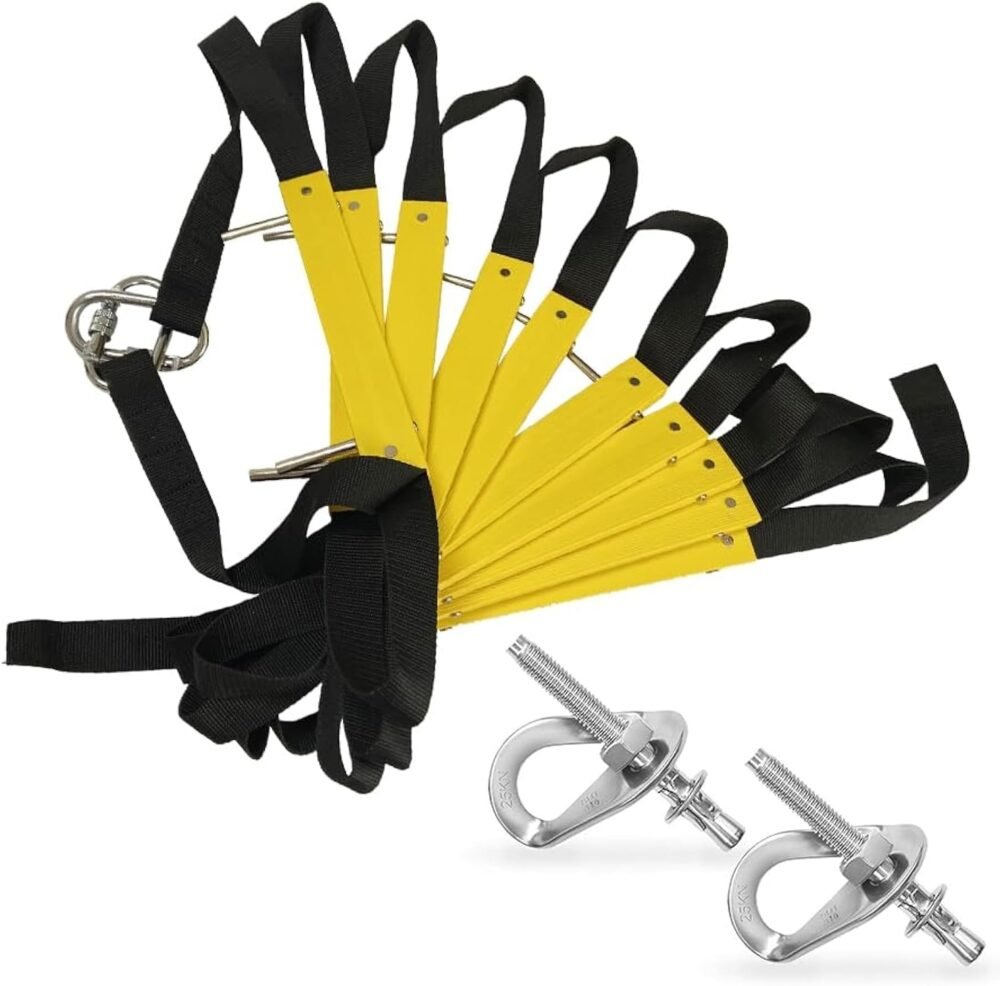
Ask a qualified installer to check the mounting surface and attachment points before relying on this ladder.
6. Built-In Fire Escape Ladder 2 Storey | Retractable Ladders

A fixed storage point keeps the ladder at the planned exit. Have a qualified installer confirm the location and keep access clear.
5 backup exit checks to do this weekend
- Start in the bedrooms. Walk the main route and identify a second way out wherever possible. Show overnight guests both routes.
- Try the doors and windows. Make sure the ones in your plan can be opened from the inside and that furniture, locks, or stored items do not block the way.
- Check the ladder and the landing. Confirm that the model fits the opening, uses an approved attachment for that model, reaches the ground as instructed, and leads to a clear landing. Store it near the window where it is meant to be used.
- Give everyone a role. Decide who will help young children or anyone with limited mobility. Keep smoke alarms working and choose an outdoor meeting place everyone can find.
- Practice the plan, not a climb from height. Walk both routes with everyone in the household. Learn how your ladder attaches using the manufacturer’s instructions, without practicing a descent from an upper floor. If the model is single-use, do not deploy it for practice unless the instructions allow it.
Common questions about fire escape ladders
Can a balcony count as a backup exit?
Only if it leads to a usable exit route. A balcony by itself does not get you to the ground. If you are trapped, tell 911 exactly where you are.
Do I need both a fire escape ladder and a smoke alarm?
Smoke alarms give you early warning. A ladder serves a different purpose: it can provide a way down from a suitable window when your planned exit is blocked. Test your alarms and check your routes even if you already own a ladder.
What is the first thing I should do today?
Walk from each bedroom to the outside, then do it again without using the usual route. If both routes depend on the same hallway or stairs, you have found the gap to fix first.