An AED cabinet keeps a defibrillator visible, protected and ready when every second matters. The right cabinet is not simply a storage box: its location, access, signage and inspection routine all influence how quickly someone can respond. This guide explains how Canadian workplaces, schools, sports clubs, hotels, apartment buildings and community venues can plan a practical AED point.
Why an AED cabinet matters
An automated external defibrillator analyses heart rhythm and gives clear voice prompts. If cardiac arrest is suspected, call 911, begin CPR and follow the AED instructions. A clearly marked cabinet gives the device a permanent home, reduces searching and helps protect it from dust, accidental impact and unauthorised movement.
Benefits of a visible AED cabinet
- A fixed and familiar location for emergency equipment.
- Fast visual identification through strong colour and clear labelling.
- Protection from everyday knocks, dirt and accidental relocation.
- A transparent panel that makes routine checks easier.
- Wall mounting that keeps floors and escape routes clear.
Where should an AED cabinet be installed?
Choose a busy, accessible position available whenever the building is occupied. Reception areas, main corridors, sports halls and shared entrances are usually better than locked offices or plant rooms. Nothing should block the door, and directional signs should guide visitors from the main entrance.
For outdoor use, check the temperature and moisture limits stated by the AED manufacturer. A cabinet can shield equipment, but it does not automatically make every defibrillator suitable for rain, freezing weather, heat or direct sunlight. Select a model designed for the intended environment.
How to choose the right AED cabinet
- Measure the complete AED kit. Include its carry case, spare pads and accessories.
- Assess the environment. Indoor and outdoor locations require different protection.
- Prioritise rapid access. Opening the cabinet should be simple and intuitive.
- Check visibility. Colour, AED markings and a viewing panel help people recognise it.
- Plan inspections. Staff should be able to check the status indicator without delay.
AED storage box from ISOP Canada
Click the product photograph or name to see current dimensions, price and availability on ISOP Canada.
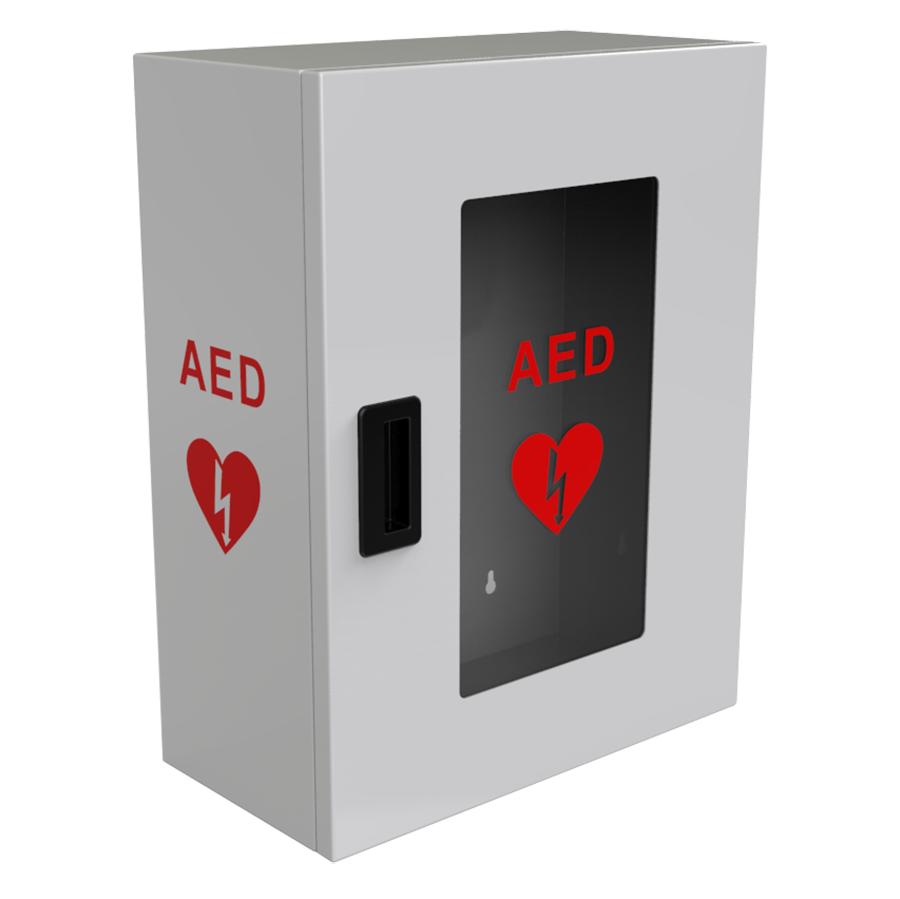
This red wall-mounted emergency box is designed to keep safety equipment visible and organised. Before ordering, compare its internal dimensions with the AED and carry case. Confirm that the box and installation location are suitable for the equipment and environment.
Inspection and maintenance
Assign responsibility and keep a simple record. At least monthly, inspect the AED status indicator, battery and pad expiry dates, cabinet cleanliness, labels and access route. Repeat the check after every opening, use or relocation. Always follow the AED manufacturer’s instructions.
Frequently asked questions
Should the cabinet be locked?
Rapid access is essential. If any lock is used, the emergency plan must ensure that the key or code is immediately available. Follow the requirements and risk assessment for your premises.
Will every defibrillator fit?
No. Compare width, height and depth, allowing extra room for the case, pads and accessories. The AED should be easy to remove without snagging.
Is extra signage useful?
Yes. Consistent signs near entrances and along corridors help visitors. Inform staff and regular users, and include the AED point in emergency briefings and drills.
Reliable preparation
Record the location, update the emergency plan and arrange appropriate training. The Government of Canada provides official emergency information. A cabinet works best as part of a complete system with clear signs, regular checks and trained people.
Conclusion
The best AED cabinet is visible, accessible, correctly sized and appropriate for its surroundings. Combine the right box with a documented inspection routine and a clear response plan. Review the linked ISOP Canada product to confirm specifications and compatibility before installation.